
Beat and Fit Adventure
Introduction
Beat&Fit Adventure is an innovative product aimed at revolutionizing people’s daily fitness routines and experiences. In today’s fast-paced environment, health issues cannot be overlooked, yet the monotony of traditional exercise makes it challenging for individuals to develop long-term fitness habits. Additionally, considering communities such as fitness novices and those with social anxiety, public fitness environments like gyms may not be ideal for them. To address these challenges, our team has developed Beat&Fit Adventure, a virtual reality based fitness adventure game. In an increasingly demanding era where workloads and psychological stress are on the rise, physical well-being becomes an inevitable concern [1]. However, traditional fitness methods, such as going to the gym, often lack the necessary fun and have challenge to inspire people’s enthusiasm for exercise [2]. Moreover, for the average office worker and students, the intensity of gym workouts may be too high, leading to fatigue and discouragement, making it difficult to sustain. For fitness beginners, the abundance of fitness enthusiasts, advanced equipment, and lack of confidence in their own workout techniques may result in feelings of shame about going to the gym. Additionally, for introverted individuals and who have social anxiety, they may be unwilling to enter unfamiliar and crowded environments [3]. The development of Beat&Fit Adventure aims to change this situation by providing users with a relaxed, enjoyable, and challenging fitness experience. By integrating virtual reality technology with exercise, we hope to create a fully immersive, creative, and motivational fitness environment for users to enjoy, alleviating their concerns about traditional gyms and making it easier for them to stay consistent, thus promoting a healthy lifestyle. Beat&Fit Adventure aims to offer users a completely new and exciting fitness experience, turning exercise from a burden into a source of pleasure and enjoyment.
Analysis of Requirements
Market Research
We conducted market research and compared our product with Fitness Bar and Fitness Hoop. Fitness Bar, due to its lack of entertainment value, offers a monotonous fitness experience, leading users to lose motivation and enthusiasm, which makes it difficult for them to persist in long-term engagement. In contrast, our design focuses on leveraging virtual reality technology and gamification to enhance user engagement and enjoyment, thereby addressing the shortcomings of Fitness Bar. Furthermore, compared to Fitness Hoop, our product features a more intuitive and user-friendly interface and guidance system, aimed at improving the accuracy of fitness postures, accelerating user learning curves, and reducing entry barriers. Additionally, Fitness Hoop may have higher intensity levels, we offer difficulty selection options to lower the intensity threshold, catering to a wider range of fitness needs within the community.
Questionnaire Survey
We designed a questionnaire divided into three sections to gain insights into market conditions and user requirements. The first section focuses on the challenges of traditional exercises, aiming to understand users’ perspectives on the common issues of boredom and difficulty in sustaining traditional fitness routines. The second section investigates participants’ views of virtual reality, aiming to understand their acceptance and attitudes towards the emerging technology, as well as the advantages they expect to gain from virtual reality in their fitness experiences. The third section collects feedback on gaming elements, aiming to identify the gaming elements preferred by users and provide directions for product design that better align with the preferences of the general public. We invited 66 university students to participate in the questionnaire survey (39 males and 27 females; aged between 18 to 24), and conducted the following analysis of their responses:
Challenges of traditional exercises
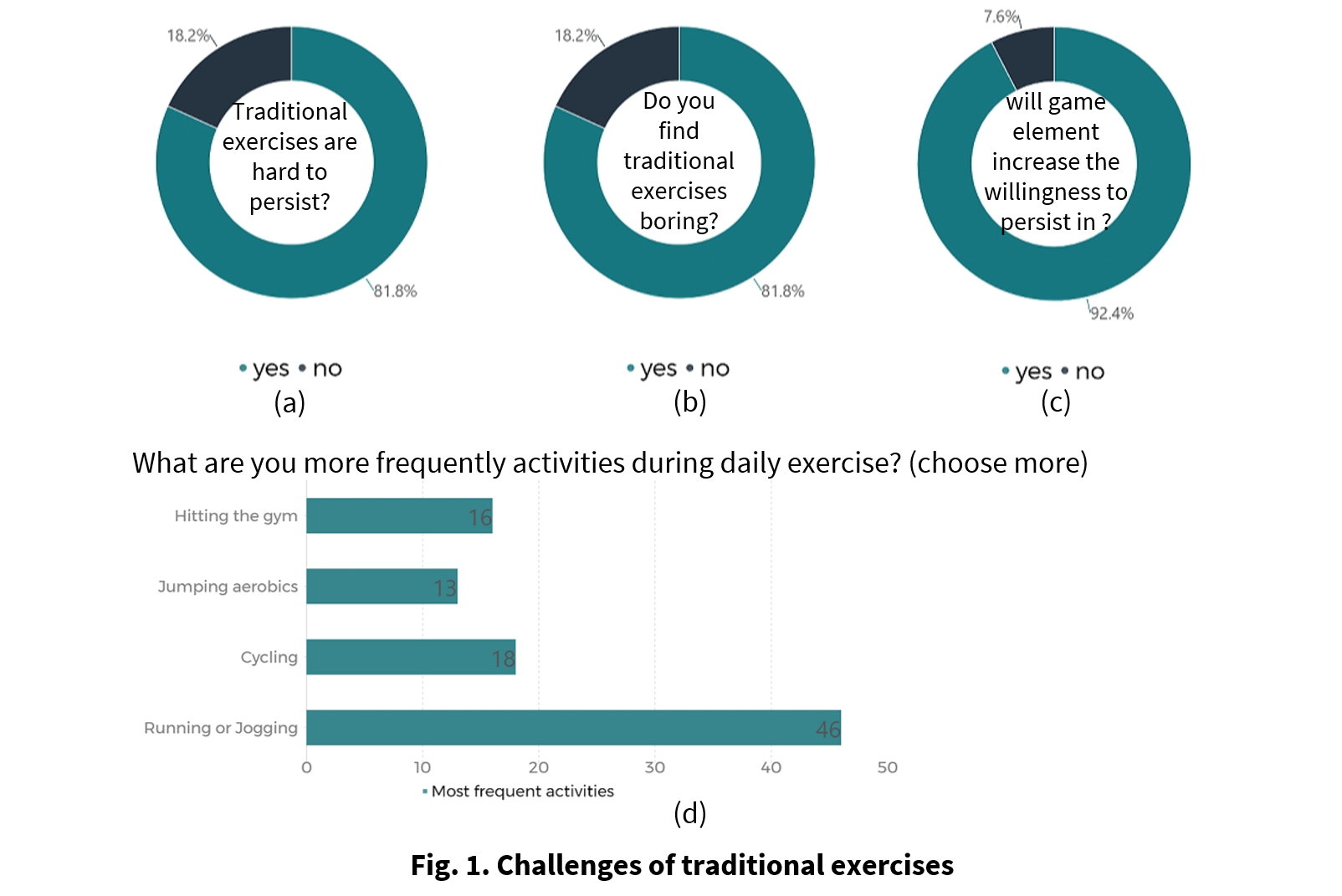
According to the statistical results shown in Fig.1, over four-fifths of the respondents
- find it challenging to maintain long-term fitness routines. Additionally, the majority of participants (over 80%)
- perceive traditional exercise activities as dull. This indicates that traditional fitness methods lack appeal and are difficult to sustain over the long term for most individuals. Moreover, over 90% of them believe that incorporating entertainment elements into fitness activities would motivate them to achieve to their exercise routines. Therefore, enhancing entertainment elements may increase users’ willingness to maintain long-term fitness activities.。
- Furthermore, as illustrated in (d), most individuals choose activities like running or walking for their daily fitness, with this number exceeding twice the number of those who go to the gym. This is likely because university students, burdened with heavy academic workloads and lacking in exercise, find low-intensity activities like running or walking more suitable. Additionally, according to interviewees, beginners with no prior fitness experience feel embarrassed to visit the gym, leading to their reluctance to try.
User Perception of Virtual Reality
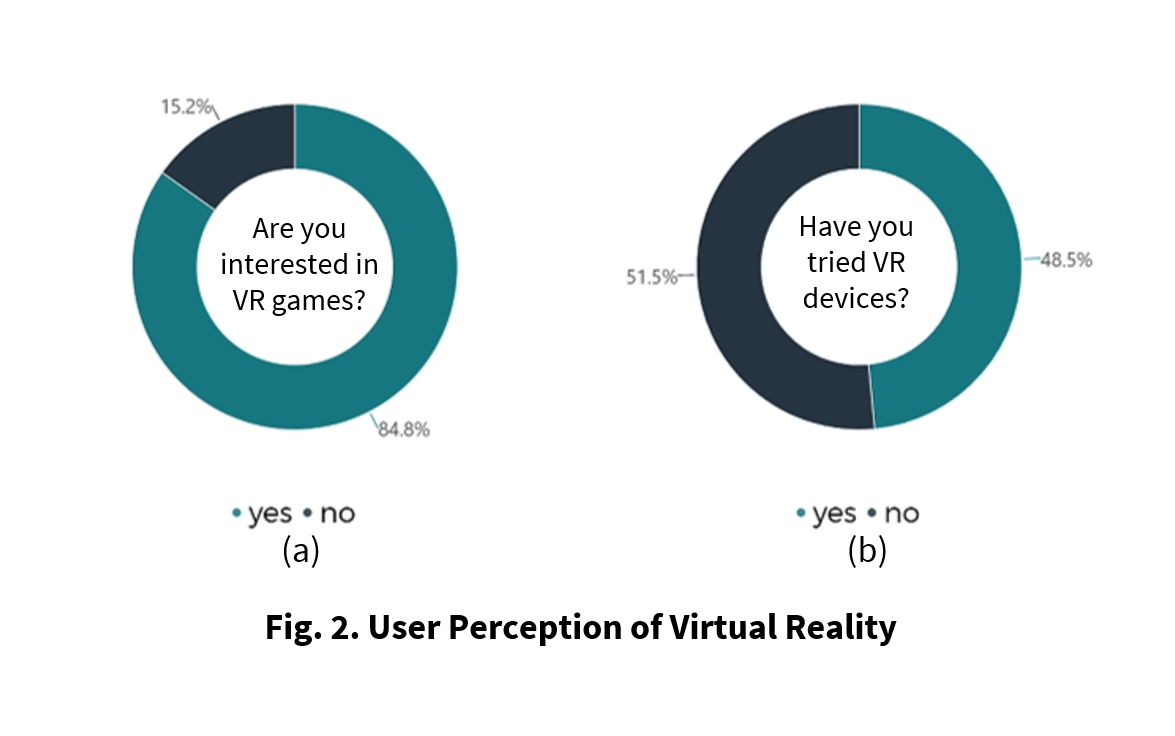
The findings shown in Fig. 2. reveal a high level of interest in VR gaming among the majority of participants (over 85%)
-
However, it’s noteworthy that less than half of them have had actual exposure to VR gaming
-
This indicates that those who have experienced VR gaming maintain an interest in it. Moreover, many individuals who haven’t yet tried VR express a strong desire to explore it, highlighting the vast potential of the VR market.
Entertainment Element User Preferences
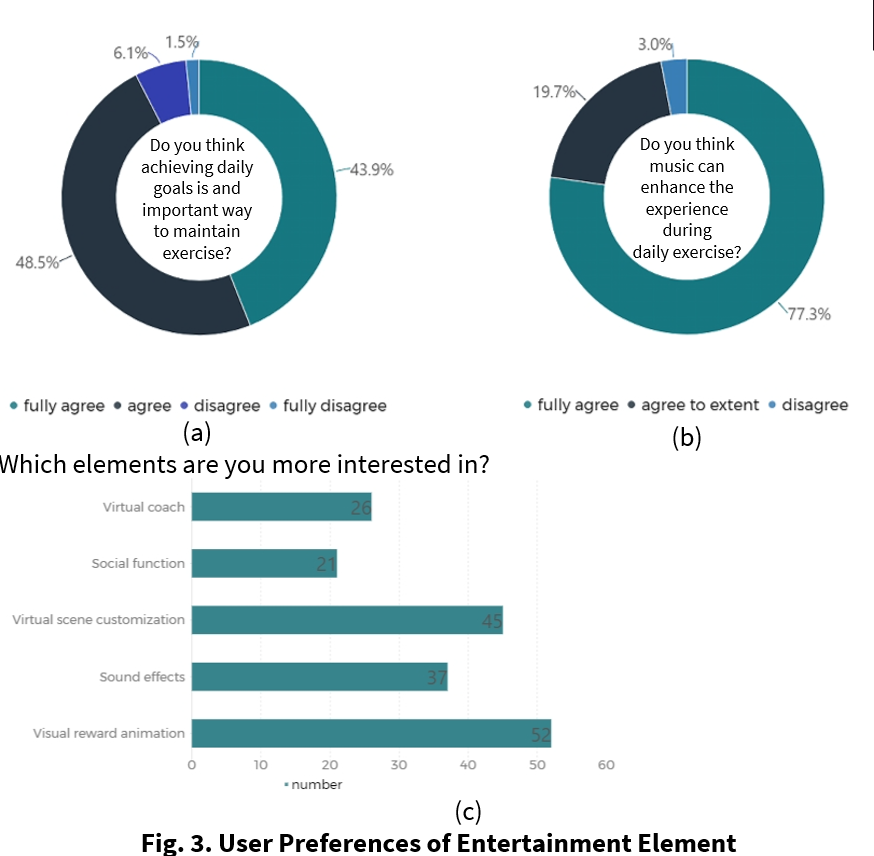
In our survey, we focused on users’ attitudes towards daily goal mechanisms and music (a and b). The results indicate that most of users hold optimistic views towards these two entertainment elements. Additionally, we presented five game elements based on implementation for participants to choose from (c). Through analysis, we found that they expressed a high level of interest in the following elements: Visual reward animation, Virtual scene customization, and Sound effects. This provides us with guidance to prioritize these game elements in product design.
Design Alternatives and Prototypes
Based on the market research findings and user needs analysis, we have designed a series of innovative design alternatives and prototypes. Here are the main prototypes we have designed:
Gameplay Scene
Collider (Notes)
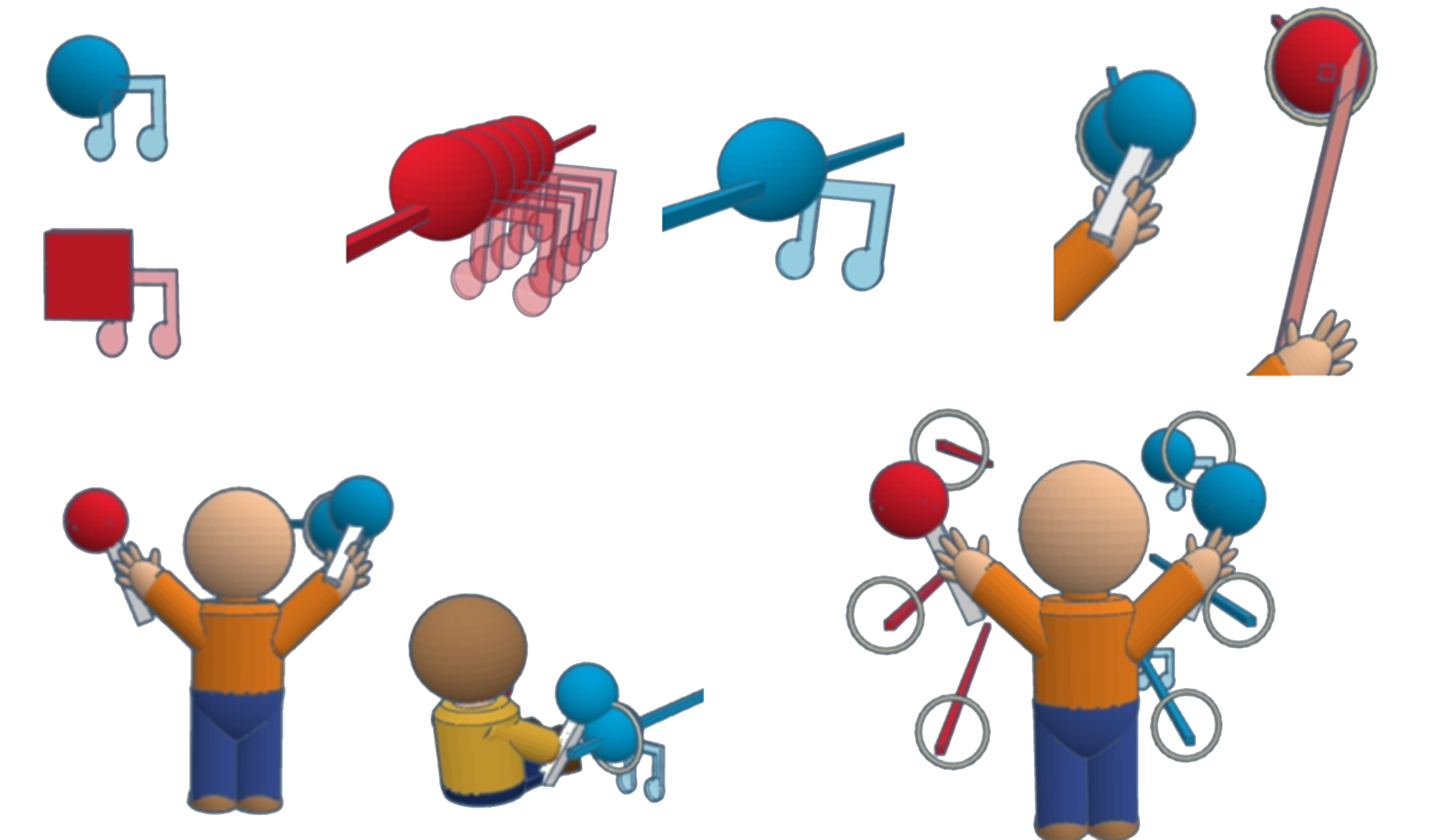
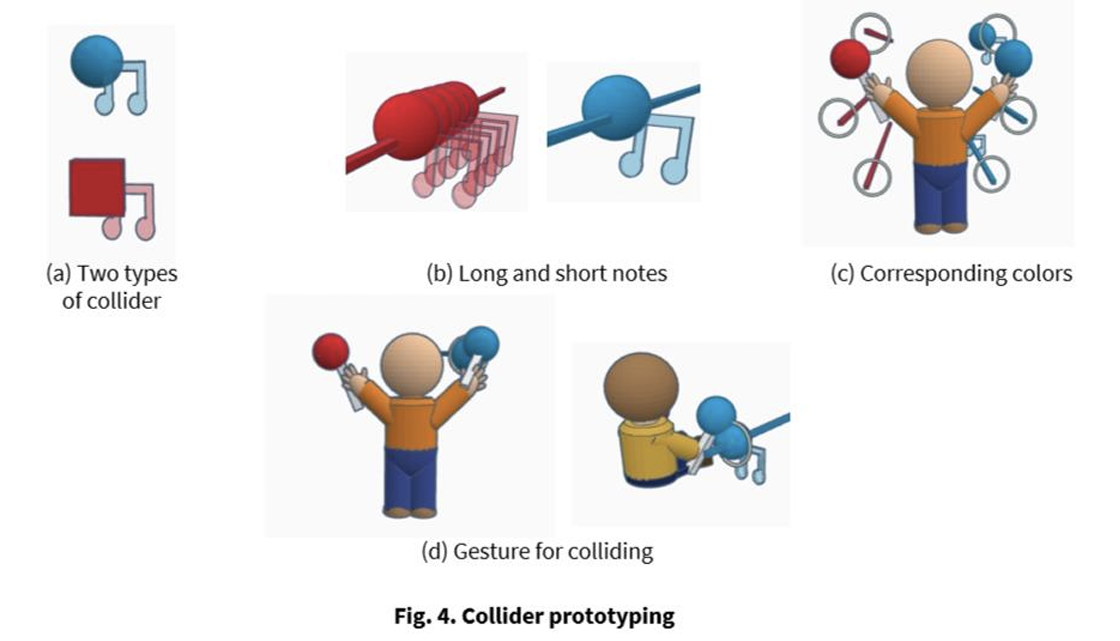
- Collider type We have designed two types of colliders shown in Fig. 4. , one circular and the other square (a). Through observing music games and sheet music (staff notation), we found that musical notes often have a circular appearance or shape, which is more visually aligned with the game elements. Additionally, we noticed that collision detection with circular bodies is relatively simpler compared to square bodies, which can reduce the computational load of the game and provide players with a smoother and more natural collision sensation. Taking all factors into consideration, we ultimately chose circles as the collision bodies for the notes in our game.
- Rhythm The coordination between music and movement is a crucial aspect of the gaming experience. When players synchronize their movements with the rhythm, they not only better sense the game’s tempo but also experience the dynamism and joy that music brings during physical activity. Therefore, we parse the note information from MIDI files to extract the music’s rhythm and dynamically generate collision bodies. This ensures that the musical rhythm in the game aligns with the players’ movement tempo, providing a seamless integration of music and physical activity.
- Notes Handle We employ a differentiated approach to handle notes of different durations (b). For long notes, we generate five consecutive collision bodies to reflect the sustained nature of the note. Meanwhile, for short notes, we generate only one collision body to maintain the game’s rhythm.
- Generation positions We have set up three collision body generation positions for the left and right hands respectively, with red indicating the left hand and blue indicating the right hand (c). The controller corresponds to the color of the collision body, allowing players to know which hand to use for collision. For each position, we designed under the guidance of professional coaches:
- Upper position (d) : Players need to raise their arms upwards. This movement effectively stretches and activates the shoulder and upper arm muscles, helping players exercise their shoulder and back muscles more effectively.
- Middle position : Players need to flatten their arms. This action helps maintain the stability and balance of the arms, strengthens the arm muscles, and improves coordination.
- Lower position (d) : Players need to squat to make a collision. This action effectively exercises the thigh and gluteal muscles, improves lower body strength and stability, and also increases overall calories burning effectiveness.
Controller
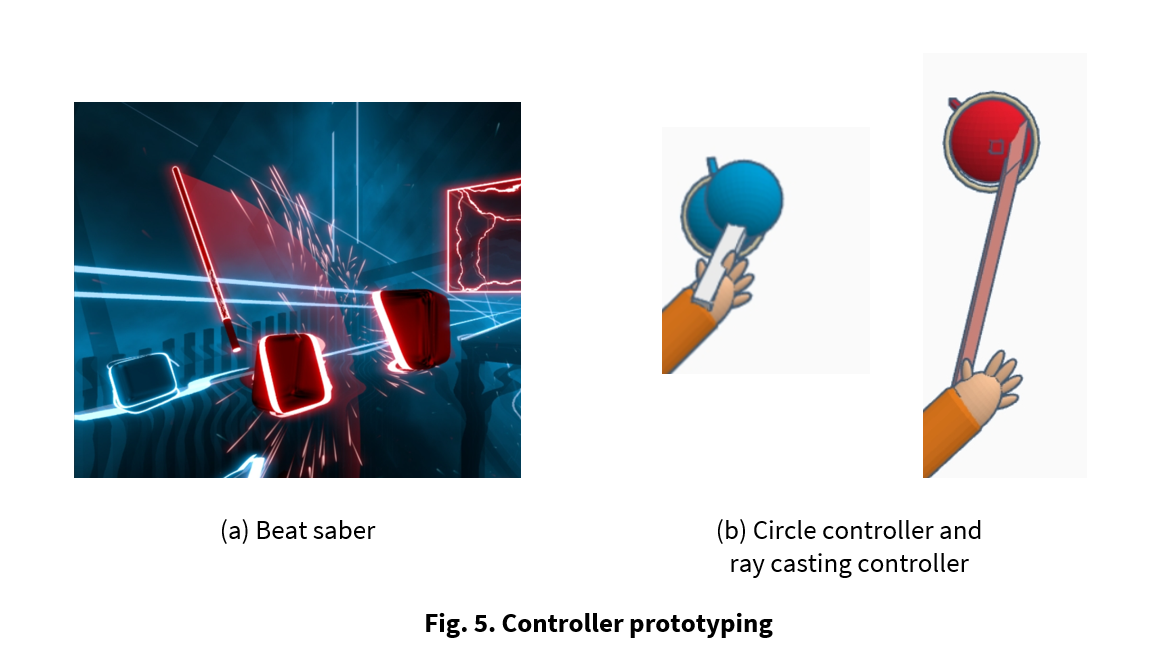
In terms of controller selection, we initially considered using a ray as the controller, inspired by designs commonly seen in some 3D music games such as Beat saber (a). However, during testing, we found that the collision with the ray was too easy, resulting in an inability to achieve the desired fitness effect. To address this issue, we designed a circular controller shown in (b). Compared to the ray controller, the circular controller requires users to exert more physical effort to collide with the collision bodies. This design better aligns with the fitness purpose, as users need more movement and strength to complete the game, thus achieving better fitness results.
Collision Effects
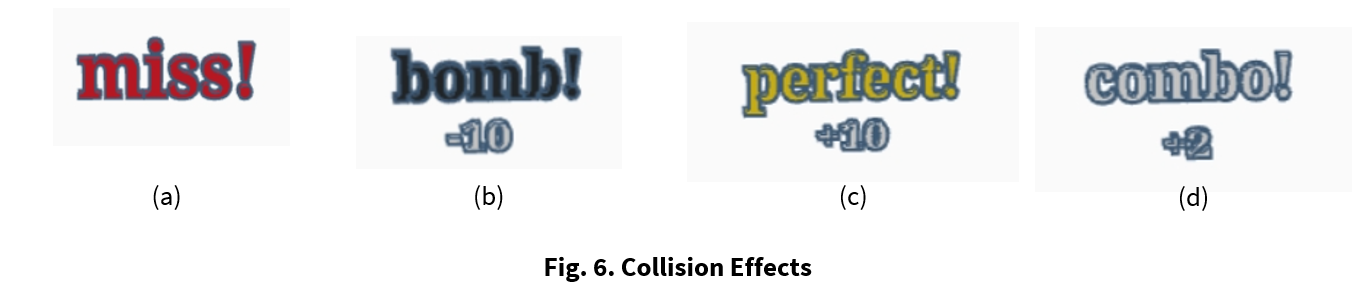
In terms of collision effects, we have designed the following effects shown in Fig. 6. :
- Perfect Collision (a) When the player successfully collides with a note, it triggers the ‘Perfect’ effect and adds +10 to the total score.
- Bomb Collision (b) If the player accidentally collides with a bomb, it triggers the ‘Bomb’ effect and deducts -5 from the total score.
- Miss Effect (c) When the player misses a note, it triggers the ‘Miss’ effect, but the score remains unchanged.
- Combo Effect (d) If the player consecutively collides with more than ten notes, it triggers the Combo effect and earns additional points. This design encourages players to maintain a steady collision rhythm to achieve a stable fat-burning state, thereby promoting more effective workouts.
Real-time Score and Consumption Display
In the top left corner of the game interface, we display the current total score in real-time. This is done to evoke players’ competitive spirit and encourage engagement by keeping track of their scores. Additionally, we integrate calorie expenditure into the game by connecting devices such as fitness trackers. This allows players to monitor the calories they burn during the game in real-time, providing them with feedback on their fitness progress. This intuitive feedback not only motivates players to complete the game but also enhances their satisfaction, ultimately increasing long-term engagement with the game.
Music and Scenes Customization
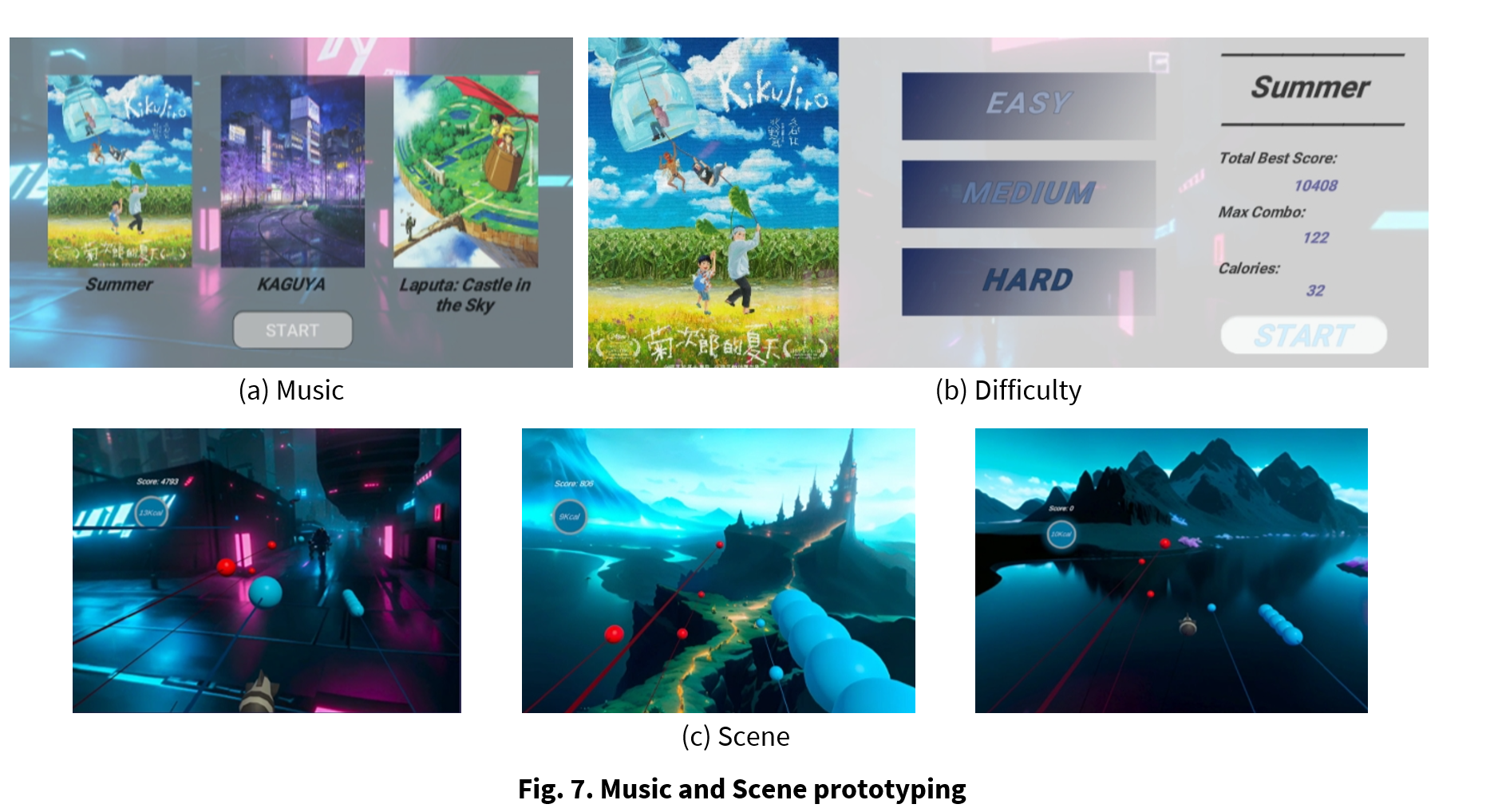
Music and scene selection Users have the option to customize based on their personal preferences and fitness needs (a). We offer a variety of music styles and rhythms for users to choose from, making the workout process more enjoyable. Additionally, we have designed a diverse range of scenes (c), allowing users to choose environments they prefer and enjoy the exercise process in a comfortable atmosphere. Difficulty Users can also select the appropriate difficulty level based on their fitness level and exercise requirements to ensure effectiveness and challenge (b).
Game Settlement Interface
Daily Achievement Goals
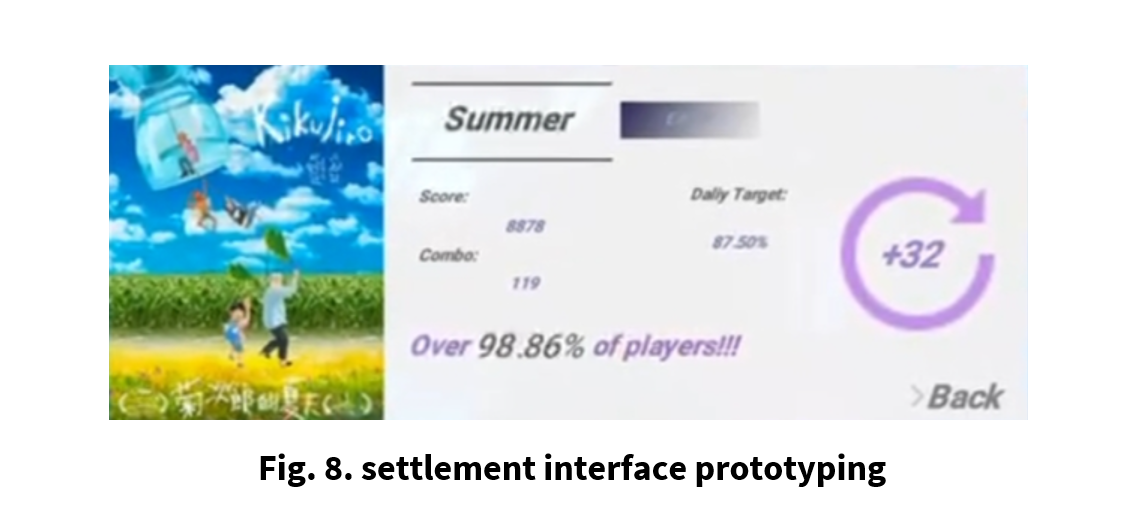
Users can set daily exercise goals and track their progress in the settlement interface as shown in Fig. 8. . After each game session, the calorie circle gradually closes based on the level of calorie expenditure in the game until the daily exercise goal is achieved. This daily goal setting helps users to maintain long-term exercise consistency.
Competitive Scoring System
The settlement interface provides a competitive scoring feature, allowing users to view their performance scores in the game and compare them with other players. This design stimulates users’ competitive mindset, encouraging them to continually improve in the game and achieve good fitness results unconsciously.
Evaluation: Data Collection and Results
Evaluation methods and data collection
Usability was evaluated by the SUS (System Usability Scale) questionnaire [4]. This questionnaire consists of two subscales representing learnability and usability. Participants rated the system based on a series of statements, utilizing a 5-point Likert scale ranging from “Strongly Disagree” to “Strongly Agree.” Higher scores indicate a higher usability.
WorkLoad The workload associated with Beat&Fit Adventure was evaluated using the NASA TLX workload questionnaire [5]. This questionnaire consists of six subscales representing different aspects of workload, including mental demand, physical demand, temporal demand, frustration, effort, and performance. Participants rated each subscale on a scale ranging from 0 to 100, with intervals of 5. Lower scores indicate a lower workload and better overall performance.
Interview was a semi-structured regarding (1) their willingness to exercise using Beat&Fit Adventure; (2) the experience of Beat&Fit Adventure; and (3) any possible improvements for the game.
Participants
Eleven participants (6 males; 5 females) between the age of 19-24 (M=21.89,SD = 1.41) were recruited from the same university campus to participate in this study.
Analysis results
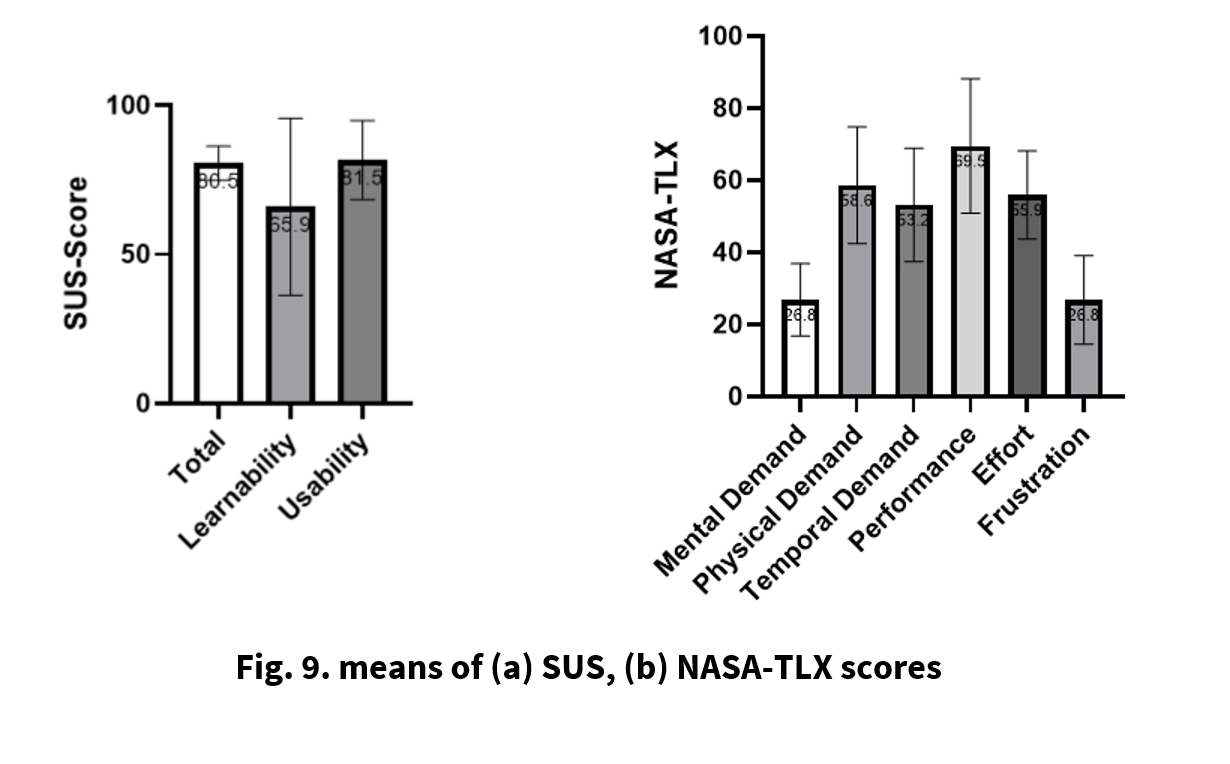
Usability I utilized the relationship graph between text, letters, acceptable range, and SUS scores [6], as well as the SUS Score grading curve ranges [7] to assess the SUS result. According to Fig. 9. (a), the overall usability of the system (M=80.5, SD=5.68) was excellent (SUS score 80.5, grade A-, percentage 85-89). In the SUS questionnaire, the subscale composed of items 4 and 10 pertains to “Learnability,” while the remaining eight items constitute “Usability.” The Learnability subscale (M=65.9, SD=29.6) was rated as OK (SUS score 65.9, grade C, percentage 41-59), and the Usability subscale (M=81.5, SD=13.3) was assessed as excellent (SUS score 81.5, grade A, percentage 90-95).
Workload As shown in Fig. 9 (b), users’ mental demand (M=26.8, SD=10.1) and frustration (M=26.82, SD=12.3) are low, while performance (M=69.6, SD=18.6), physical (M=58.6, SD=16.1), effort (M=55.9, SD=12.2), and temporal demand (M=53.1, SD=15.7) are moderately high with large variances.
Interview All participants found Beat&Fit Adventure to be an engaging fitness game. However, some individuals found the initial gameplay challenging because they lacked prior experience with VR or rhythm games, causing them to feel nervous and seek guidance on how to play. Additionally, there was feedback regarding the positioning of the collision bodies, with some participants finding them too high and out of reach, while others found it easy to interact with, leading to feelings of fatigue. Participants who had completed the requirements questionnaire inquired why a virtual coach element was not included, as they believed it would add an enjoyable aspect to the experience.
Discussion
Overall, Beat&Fit Adventure exhibits strong usability and the workload aligns well with our expectations. The higher levels of physical demand and effort meet our expectations for exercise requirements, while the lower levels of mental demand and frustration satisfy our entertainment needs. However, the learnability subscale results indicate that there is room for improvement in learning the system, which is consistent with the feedback provided during interviews regarding the lack of prior experience with VR and rhythm games. The high standard deviations for Performance, Physical Demand, and Temporal Demand (>15) may be attributed to individual differences among participants such as figure and gender, as mentioned during interviews regarding variations in collision experiences.
Discussion and Reflection
Novelty and implications
Beat&Fit Adventure introduces a completely new approach to fitness gaming through immersive experiences and innovative features, revolutionizing traditional exercise methods. By seamlessly integrating fitness with gaming elements, Beat&Fit Adventure addresses the boredom often associated with traditional workouts, transforming them into engaging and motivating activities. This helps individuals across communities to adopt long-term exercise habits, contributing to the realization of universal fitness goals.
Limitations and future work
Although Beat&Fit Adventure has made significant progress in integrating fitness and gaming, there are still some challenges to address. Particularly for newcomers who have not been exposed to VR and music games, they may feel confused in the initial stages. Therefore, one of the future tasks is to design a tutorial to guide them through familiarizing themselves with the game mechanics. The tutorial could include instructions on using controllers, understanding the cues and feedback on the game interface, and so on.
Due to individual differences, there is a need to develop a customized system based on gender and body type. This system would involve tailoring collision bodies to ensure they are neither too high nor too far away, nor too low or too close, thus achieving optimal fitness effects.
Furthermore, there is a high demand for virtual fitness coaches, which is one of the future development directions. The development of virtual coaches can not only monitor user movements and provide real-time corrections to their fitness postures, helping users avoid bad habits and the risk of injury during exercise, but also provide emotional feedback during the game, such as “Great job,” to motivate users to keep exercising. These two points will be our main focus for future development efforts.
References
[1] Kouvonen, A., Vahtera, J., Oksanen, T., Pentti, J., Väänänen, A.K., Heponiemi, T., Salo, P., Virtanen, M. and Kivimäki, M., 2013. Chronic workplace stress and insufficient physical activity: a cohort study. Occupational and environmental medicine, 70(1), pp.3-8.
[2] Hagberg, L.A., Lindahl, B., Nyberg, L. and Hellénius, M.L., 2009. Importance of enjoyment when promoting physical exercise. Scandinavian journal of medicine & science in sports, 19(5), pp.740 747.
[3] Hausenblas, H.A., Brewer, B.W. and Van Raalte, J.L., 2004. Self-presentation and exercise. Journal of applied sport psychology, 16(1), pp.3-18.
[4] Lewis, J.R., 2018. The system usability scale: past, present, and future. International Journal of Human–Computer Interaction, 34(7), pp.577-590.
[5] Hart, S.G., 2006, October. NASA-task load index (NASA-TLX); 20 years later. In Proceedings of the human factors and ergonomics society annual meeting (Vol. 50, No. 9, pp. 904-908). Sage CA: Los Angeles, CA: Sage publications.
[6] Bangor, A., Kortum, P. and Miller, J., 2009. Determining what individual SUS scores mean: Adding an adjective rating scale. Journal of usability studies, 4(3), pp.114-123.
[7] Sauro, J., 2011. A practical guide to the system usability scale: Background, benchmarks & best practices. Measuring Usability LLC.